

Staff Spotlight: Jarret Birch – Esports Business and Entertainment, B.A.
For Jarret Birch, Esports at WVU has been about much more than competition. After joining the program as the captain of the Rocket League team, Birch found opportunities to develop his skills beyond the game. His time as captain and as a graduate assistant allowed him to explore the business and operations side of esports. Jarret continued his involvement in the program by joining as a full-time Esports Outreach Coordinator, where he instructed the Exploration of Esports and Interactive Gaming (ESPT 101) course.
In this Q&A, he shares what he learned as a student-athlete, the hands-on experiences the online Esports Business and Entertainment, B.A. program from the College of Applied Human Sciences offers, and why he sees opportunities for the next generation of esports professionals.
How did you get your start with the esports team?
My game was Rocket League, a game where you essentially play soccer with cars. During COVID, I started taking the game more seriously, and Josh Steger, the Director of Esports, reached out to me in 2022 through a recruiting platform called Spin that connects high schoolers with colleges.
Did you have any cool experiences when you were the captain of the team?
We did a lot of traveling, which is definitely the best part about being on the team. We went to Harrisburg for a tournament, which isn’t too far from here. A highlight for me was I had the opportunity to go to Saudi Arabia for a $2 million tournament. I was able to make a lot of fun memories when I was a player.
What was the transition from athlete to a more behind-the-scenes role like? How were you able to apply what you learned?
This was a change that I was originally a little bit worried about, but I quickly realized it wasn’t that big of a transition. When you’re on the front end of things as a player, you learn a lot about what’s happening behind the scenes without even realizing it.
When I was making the transition, I started working with Josh Steger to help him out because the staff was so small. It started with some management tasks here and there when needed. He could trust me as somebody who was on campus and the captain of one of the teams. Even before I transitioned to a staff member, I was doing things to help within the program.
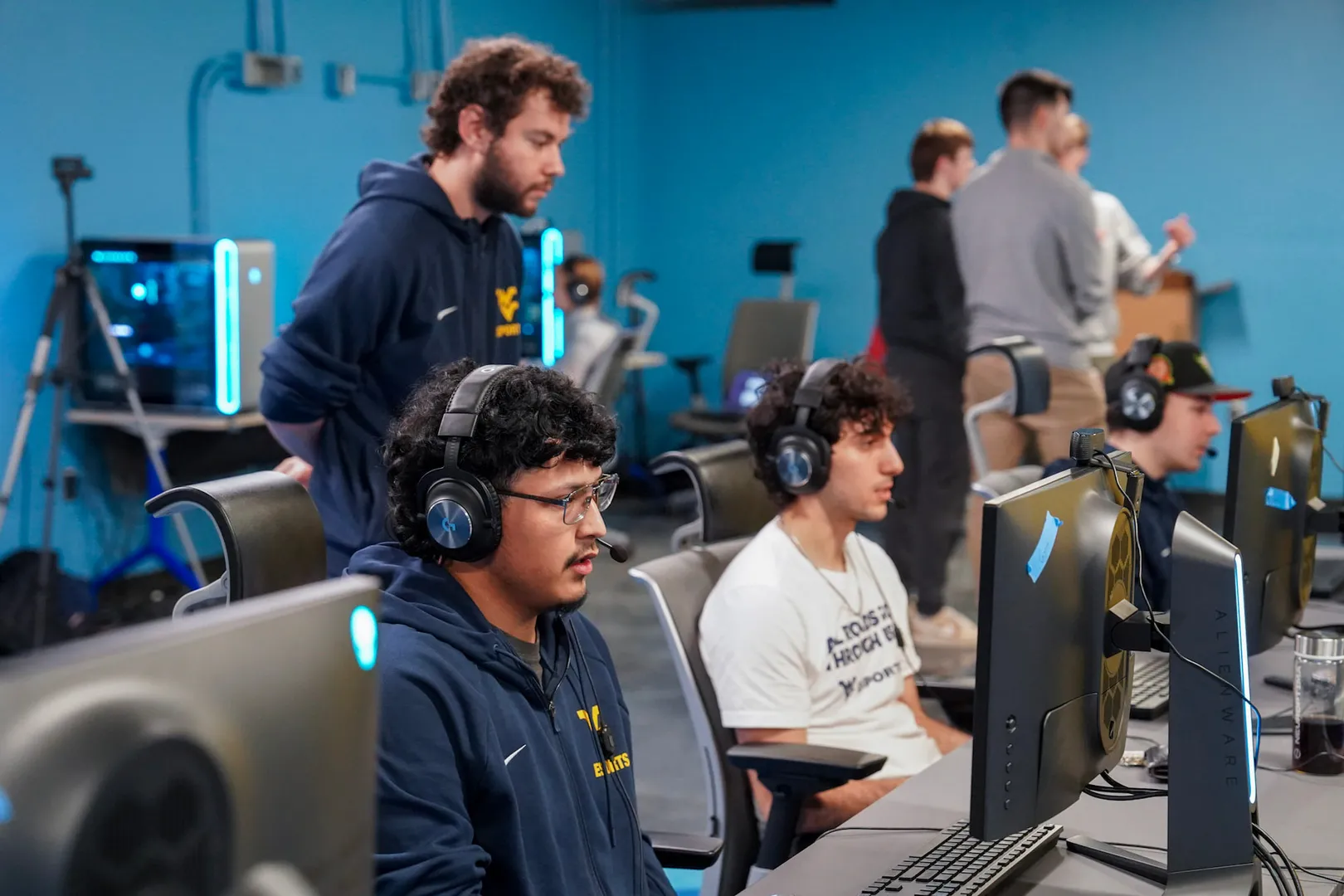
Photo: Jarret Birch watches esports athletes practice to help develop them into stronger players.
What aspect of working with the WVU esports program drew you in? What was your area of interest?
I had a very big interest in helping these players with their growth and development. When I came to WVU, I started as a computer science major, and I very quickly realized that wasn’t something I was interested in. I’m glad that I ended up in a more hands-on field like esports.
Josh was an incredible mentor for me throughout my time here. He helped me realize that it’s okay to change the path I was on if I wanted to do something else. He was always there for me, so I was really inspired by that.
"A lot of players and students may not make it to the professional level as athletes, but I want them to develop as people and be able to go and be successful in society when their time here at WVU is done." Jarret Birch, Esports Outreach Coordinator
Getting to work with these players and helping guide them is one of the best parts of what I do. A lot of players and students may not make it to the professional level as athletes, but I want them to develop as people and be able to go and be successful in society when their time here at WVU is done.
From being the captain of the team, to graduate assistant, and now a full-time staff member, what types of things are being done now to continue to push WVU Esports and its connected programs further?
I think over the years, recruitment has gotten a lot better at bringing in big-name players. As our teams have developed and gotten better results, it’s almost like the winning team stays winning. As our teams have developed, it’s a lot easier to recruit those players because they know they’re going to be surrounded by some of the best guys in the entire collegiate space.
I think now we just have a much bigger staff and support system around these players. When I first started, it was a computer lab on the Downtown Campus with 20 computers and 20 seats, and Josh was running things. That was kind of it.
Now we have two graduate assistants, two full-time staff members and Josh directing us, of course. We also have mental and fitness coaching for the players, as well as nutritionists who come in and talk to them. We have so many more resources to help these players off the field, which is going to help them on the field.
As we continue to grow, that creates more opportunities for the students to get involved.
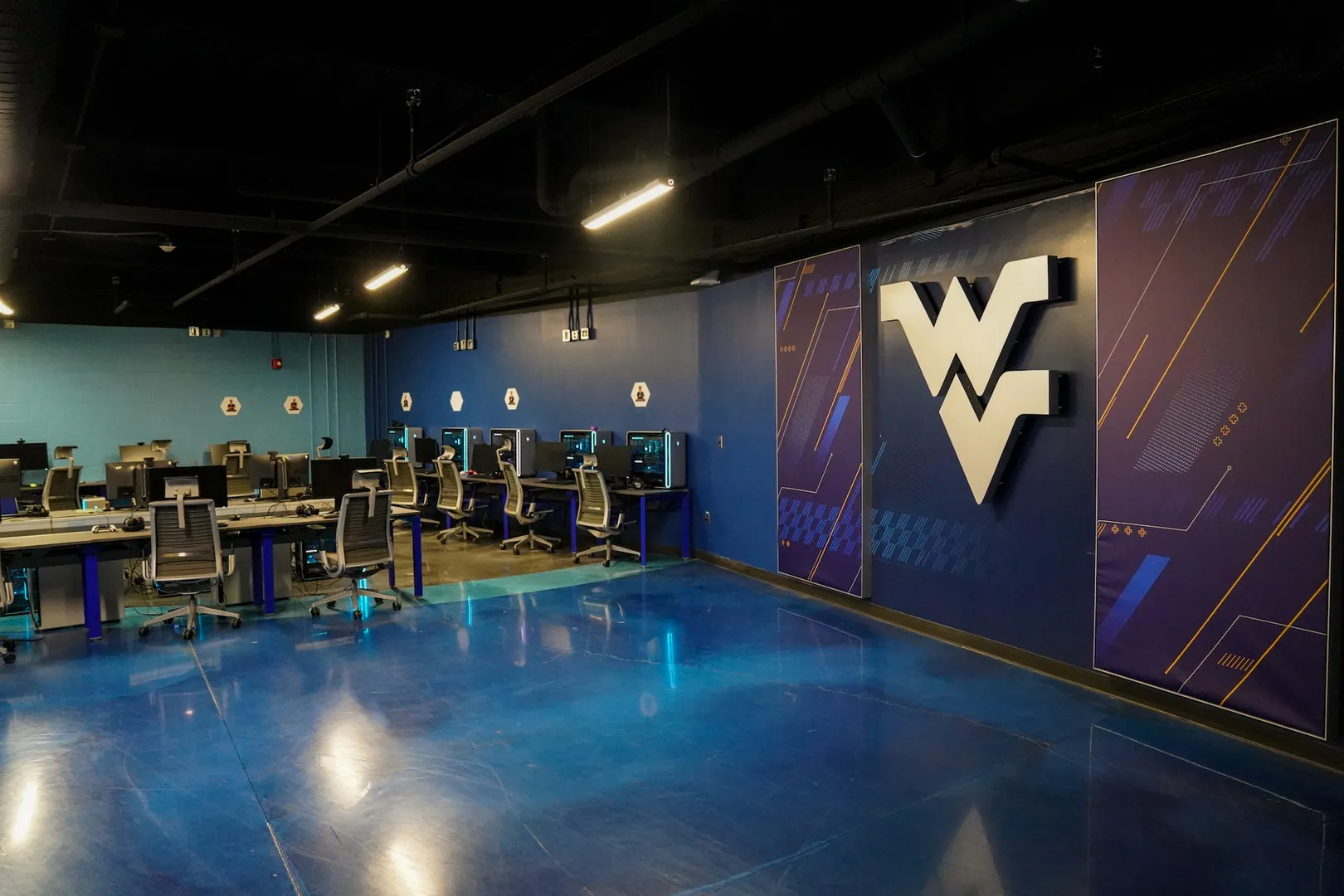
Photo: The WVU Esports space where teams practice, scrimmage, and build community.
Some areas of the internet say esports is a tough place to be, while others say it’s rapidly growing. Why do you think people are seeing it from both sides?
One thing I talked about a lot when I taught the Esports 101 class last year is that esports is definitely behind in terms of governance. There’s not a whole lot of esports governance.
But the numbers, specifically the number of people playing video games and the number of people involved in esports, show that it’s growing.
As esports continues to grow, what do you think will be the next big collegiate esports game?
That’s a tough question. I think battle royales are going to become a little bit bigger in colleges soon. Battle royales are a huge part of gaming as a whole, but they’re not a big part of collegiate esports yet.
Apex Legends and Fortnite both have pretty big scenes, but I feel like they haven’t really made their way into the top programs yet. So, I think battle royales, whether it’s one that’s already out right now or a new one that’s around the corner, are the next games that are going to break out.
What types of hands-on opportunities are students getting to help put events on or support the team?
We try to always provide opportunities for students.
This semester is the first time we’re introducing student internships. These students are actually going to be able to use this as a class for credit, giving them something to put on their resumes. By the time they’re done at WVU, they’ve actually worked in the esports industry.
"These students are actually going to be able to use this as a class for credit, giving them something to put on their resumes. By the time they’re done at WVU, they’ve actually worked in the esports industry." Jarret Birch
That gives students a lot of opportunities for real, hands-on experience. They get to run our broadcasts, do play-by-play on air ‘casting’, or get involved with the digital and social media marketing. Students have a lot of freedom to come up with ideas and then execute them.
We also have events that we’re running. Last semester, we ran the WESEL state championship, which is the West Virginia high school league. We ran the finals on campus in the Mountainlair, which was about 10 hours or so, and we had a day of preparation beforehand.
The students got two full days of experience, whether it was hands-on experience with broadcasting, production and live events, or putting together logistics like getting all these computers loaded into a truck and bringing them over. They’ve had opportunities throughout the semester to work with us on events or just week-to-week things.
With the new online program launching, what opportunities will be available to students learning remotely?
I think the fully online program is such a great direction because esports is a field where much of the work can be done online. That’s one of its advantages that contributes to its growth.
"I think the fully online program is such a great direction because esports is a field where much of the work can be done so much online. That’s one of its advantages that contributes to its growth." Jarret Birch
We don’t have to deal with regular sports where we have to travel an entire day to go get a game. We’re scrimmaging other colleges every day and can play multiple matches a week. We have so many more opportunities in an online space to learn and grow.
For students in the online program, even though they’re online, they can still get much of the same hands-on experience. You can still cast remotely, help with production and content, and do things like that.
There’s so much you can do in an industry like this where traditionally you might not be able to do that in other areas.
What has been your favorite moment of being connected to the WVU esports ecosystem?
I think one of my favorite aspects is just the community feel that we have around here. This is something that a lot of the players always preach, and it helped me so much.
Even from day one, we’ve had that.
I moved from California, so I drove across the country from my hometown to WVU. It was a very different, very big change. When I walked in the door, I immediately had 20 friends because every single person in the program was so welcoming.
No matter what you do in the program, everybody here is just so friendly.
We do a lot of semester meetings and activities where everybody’s involved, and that really helps build a community. A lot of people who are coming into the esports industry might not be as social, and that’s where we try to break down those barriers.
The community aspect really helps. Even when I was a player and now as a staff member, everybody just feels like a big group that’s working toward something.
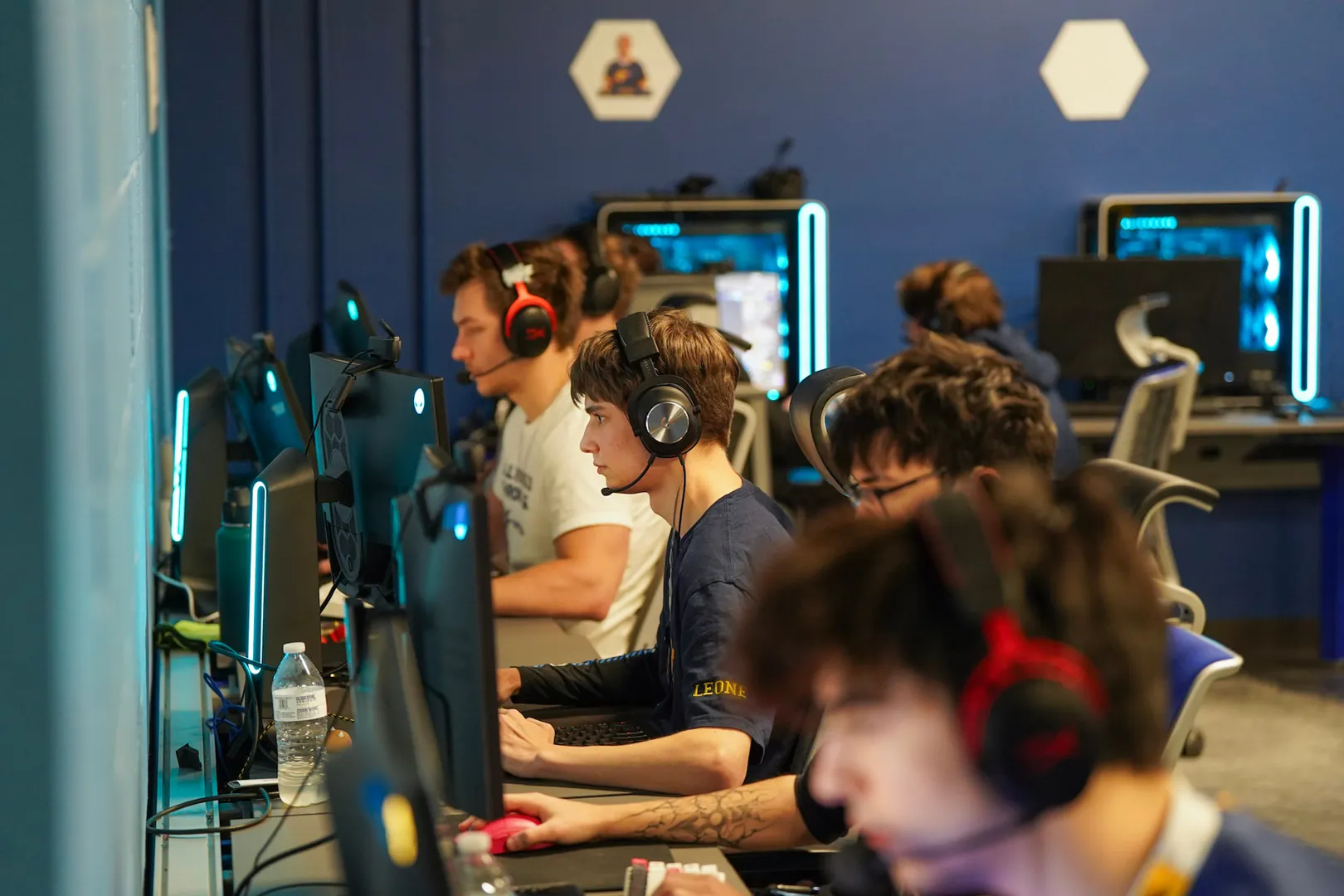
Photo: WVU Esports team practicing together.
What advice do you have for anyone who’s looking to start in esports?
The best thing to do is just reach out and ask. I think it’s a wonderful, growing industry. There are a lot of positive aspects behind it, and it’s something that isn’t going to be gone in five years. This is absolutely going to be here, and it’s going to keep growing and getting bigger.
"This is absolutely going to be here, and it’s going to keep growing and getting bigger." Jarret Birch
My advice is to get involved as quickly as you can. We have a Discord server that you can join to get connected and stay up to date!
The final question is a little more fun. What games have you been playing lately?
I, unfortunately, fall victim to the cycle of playing FIFA every year, so that’s coming up. I’ve already got my friends talking to me about that.
I’ll also occasionally hop on Rocket League even though I’m retired. I don’t play it very much anymore, but it’s still nostalgic to get on every once in a while.
Get Started in a Rapidly Growing Industry
Thank you to Jarret for his time and insight!
As WVU expands its online esports education, Jarret Birch sees even more ways for students to gain practical experience and build careers in the industry. For anyone considering a future in esports, his advice is straightforward: get involved and start learning as quickly as you can.
Ready to learn more? Explore the online Esports Business and Entertainment, B.A. program and connect with CAHS Assistant Director for Advising and Retention, Betsy Robbins, to learn how this program can help you level up your future.